



JSW Infrastructure Q2 Revenue Rises 17% to ₹1,480 Crore
 Samrita JosephOctober 28, 20262 Mins read
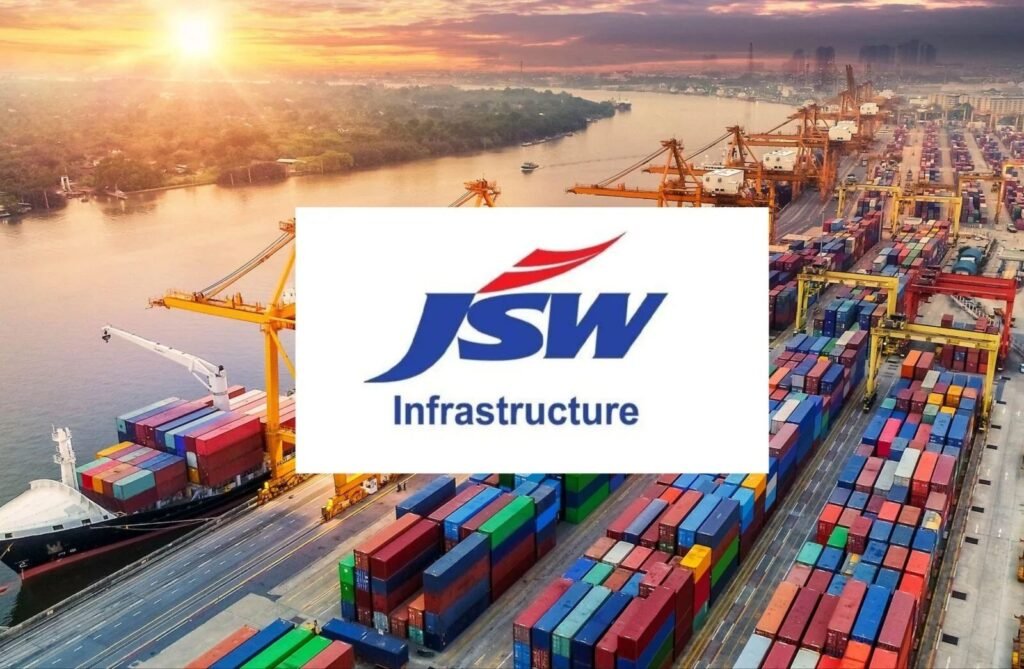
JSW Infrastructure Limited reported consolidated revenue of ₹1,480 crore for the second quarter of Financial Year 2026–27, marking a 17% increase from ₹1,265 crore in the corresponding quarter last year. The performance highlights continued growth in the company’s port operations as India’s logistics and maritime infrastructure sector responds to expanding cargo movement and industrial activity.
The latest figures, published on October 27, 2026, represent a year-on-year revenue increase of ₹215 crore. While the reported results point to steady business expansion, the available financial update does not disclose detailed quarterly profit figures or a breakdown of revenue by individual port.
Port Operations Support Revenue Growth
JSW Infrastructure operates across port services and related logistics infrastructure. Its business is linked to the movement of industrial commodities and other cargo through port facilities, making operational throughput and capacity utilisation important factors influencing revenue.
The 17% increase in quarterly revenue indicates that the company maintained business momentum during the reporting period. Cargo handling volumes, the mix of commodities handled and the performance of individual terminals can all influence revenue at port operators. However, the latest figures alone do not establish how much each factor contributed to the increase.
The company continues to pursue expansion projects intended to strengthen its infrastructure network and support future cargo demand. These include a proposed 30 million tonnes per annum slurry pipeline project in Odisha, alongside terminal development initiatives at Tuticorin and Jawaharlal Nehru Port Authority (JNPA).
Such investments are significant for port-linked logistics because integrated transport infrastructure can help move industrial materials between production centres, ports and end users. The benefits depend on project execution, demand conditions and the extent to which new capacity is utilised.
India’s Port Infrastructure Outlook
India’s port sector remains closely connected to industrial production, international trade and infrastructure investment. Efficient cargo handling and improved connectivity are important for manufacturers and exporters seeking to manage transportation costs and supply-chain timelines.
For port operators, expansion also brings challenges, including capital expenditure requirements, fluctuations in global trade and delays in bringing new facilities into operation. Changes in cargo volumes can influence revenue performance, while new infrastructure must attract sufficient traffic to generate returns.
JSW Infrastructure’s second-quarter revenue growth provides an indication of continued business expansion, although revenue alone does not reveal the full picture of profitability or cash generation.
Investors and industry observers will look for further details on cargo volumes, operating margins, project commissioning and future capacity additions to assess the sustainability of this growth.
The latest results place JSW Infrastructure among the companies to watch as India’s port and logistics network continues to develop alongside the country’s industrial and trade requirements.
- 30 MTPA slurry pipeline
- Cargo Handling
- financial year 2026-27
- India trade infrastructure
- Indian logistics industry
- Indian ports sector
- industrial logistics
- infrastructure investment India
- infrastructure sector India
- Jawaharlal Nehru Port Authority
- JNPA terminal development
- JSW Group
- JSW Infrastructure
- JSW Infrastructure Q2 FY27
- JSW Infrastructure Q2 results
- JSW Infrastructure revenue
- logistics infrastructure India
- Maritime Infrastructure
- Odisha slurry pipeline
- Port Expansion Projects
- port infrastructure India
- port operations
- port revenue growth
- quarterly financial results
- Tuticorin port development




Related Articles

India Office Leasing Hits Record 61 Million Sq Ft in First Nine Months of 2026
India recorded a record 61.06 million sq ft of office leasing between...
Bengaluru’s Hennur–Bagalur Road Work Gets December Deadline After 18-Month Delay
Bengaluru has set a December 2026 deadline for delayed Hennur–Bagalur Main Road...

Mahindra Lifespaces Plans ₹1,250 Crore Residential Project in North Bengaluru
Mahindra Lifespaces plans a ₹1,250 crore residential project on 10.05 acres in...



G Square Group Plans 13 Plotted Development Projects in Maharashtra
G Square Group plans 13 plotted real estate projects across Maharashtra, including...

Leave a comment