





Tamil Nadu Raises Non-High-Rise Building Height Limit to 19.5 Metres
 Samrita JosephOctober 27, 20262 Mins read
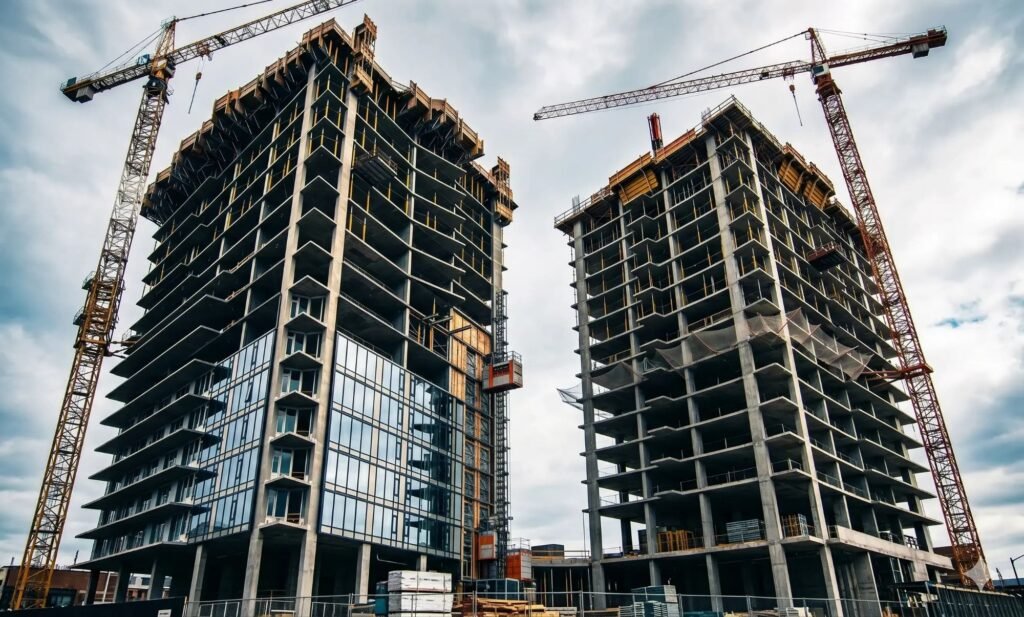
Tamil Nadu Revises Building Rules, Raises Non-High-Rise Height Limit
Tamil Nadu has revised its building regulations, increasing the maximum permissible height for non-high-rise buildings from 18.3 metres to 19.5 metres. The Housing and Urban Development Department amended the Tamil Nadu Combined Development and Building Rules, 2019, introducing changes that also affect parking provisions, electric vehicle charging infrastructure, accessibility and construction in restricted development zones.
The revised rules cover several aspects of building planning and development, with implications for residential projects, commercial establishments, hotels and other facilities across the state.
Changes to Building Height and Development Norms
Under the amendment, non-high-rise buildings can now reach a maximum height of 19.5 metres, compared with the earlier limit of 18.3 metres. The same height limit has been specified for assembly halls, cinemas, hotels and recreation facilities on large plots.
The amendments also revise road-width requirements for commercial developments. These provisions are relevant to project planning because permitted building development is linked to road access, plot dimensions and other regulatory conditions.
For high-rise buildings, the permissible floor space index (FSI) remains unchanged. Buildings along roads measuring 12 metres wide can have an FSI of 2, while the limit is 2.5 for 15-metre roads and 3.25 for roads measuring 18 metres. Setback requirements continue to increase with building height, ranging from seven metres for buildings up to 30 metres tall to 16 metres for structures exceeding 87 metres.
Revised Rules for Restricted Development Zones
The amendments specify minimum plot sizes and FSI limits for construction in restricted development zones within aquifer recharge areas. In natham and economically weaker section areas, the minimum plot size is 80 square metres, with an FSI limit of 1.
In other specified areas, the minimum plot size is 220 square metres and the FSI limit is 0.8. These provisions establish separate development conditions depending on the location and category of land.
Parking and Electric Vehicle Charging Requirements
The revised rules introduce specific parking requirements for information technology offices, IT-enabled services and bioinformatics centres. Such establishments must provide one car parking space for every 75 square metres of floor area and one two-wheeler parking space for every 50 square metres.
Most new residential buildings must also provide electrical wiring for EV charging at every car and two-wheeler parking space. Exemptions apply to buildings up to 14 metres high, developments with no more than eight dwelling units, and buildings with a floor area of up to 750 square metres.
In residential developments comprising more than 50 units, half of the visitor parking spaces must be equipped for fast charging.
Additional Requirements for Hotels
Hotels and lodges must provide dormitory accommodation for drivers, with one bed for every required car parking space. The provision adds another requirement that developers and hospitality operators will need to consider when planning parking and support facilities.
The amendments bring changes to multiple areas of Tamil Nadu’s building regulations. Developers, architects and project consultants will need to account for the revised height limits and updated requirements when preparing building plans and assessing project feasibility.
- 19.5 metre building height
- aquifer recharge zones
- building approval rules
- building height regulations
- BuildWatch News
- commercial building rules
- Construction Industry News
- construction rules Tamil Nadu
- electric vehicle charging rules
- EV charging infrastructure
- floor space index Tamil Nadu
- FSI regulations
- high-rise building rules
- hotel building regulations
- IT office parking rules
- non-high-rise building height limit
- parking requirements Tamil Nadu
- real estate Tamil Nadu
- residential building regulations
- restricted development zones
- setback requirements
- Tamil Nadu building regulations
- Tamil Nadu building rules
- Tamil Nadu Combined Development and Building Rules 2019
- Tamil Nadu Housing Department




Related Articles
G Square Group Plans 13 Plotted Development Projects in Maharashtra
G Square Group plans 13 plotted real estate projects across Maharashtra, including...

ITC Hotels Q2 Profit Jumps 52% to ₹202.65 Crore as Revenue Crosses ₹1,047 Crore
ITC Hotels reported a 52% year-on-year rise in second-quarter net profit to...

WeWork India Q2 FY27 Revenue Rises 31.6% to ₹768.7 Crore, Net Profit Jumps 67.4%
WeWork India reported 31.6% revenue growth to ₹768.7 crore and a 67.4%...



AM/NS India Supplies Specialised Steel for Indian Navy Warship INS Mangrol
ArcelorMittal Nippon Steel India has supplied all specialised steel for INS Mangrol,...

Leave a comment