





Migrant Workers in Chennai Face Long Hours, Poor Living Conditions: T.N. Planning Commission Study
 Kanmani ChokkalingamApril 8, 20251 Mins read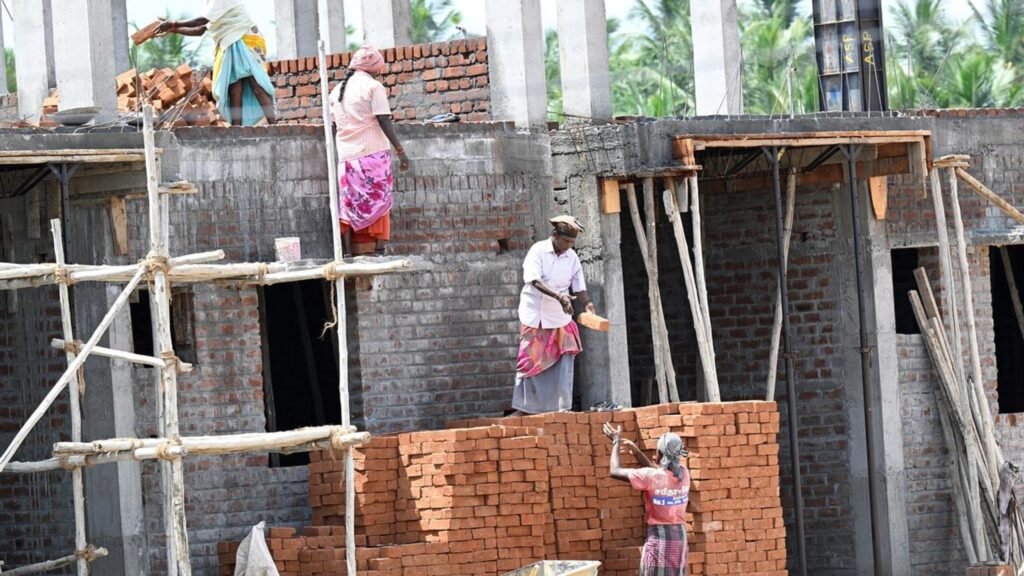
According to a new survey conducted by the Tamil Nadu State Planning Commission (SPC) in 2023, migrant workers in the Chennai region continue to face long work hours, job insecurity, and poor living conditions.
The report says 53% of migrant workers in Chennai work over eight hours a day. In the construction sector, most of them work almost 10 hours a day, while those in services work as much as 12 hours. Workers in the manufacturing sector do a little better, with half of the workers working more than eight hours.
One of the most pressing problems is the lack of formal employment contracts — 84% of the surveyed workers have no written contract. Then many have no food, travel or medical allowances at all and are not covered by social security systems such as the Provident Fund, health insurance or paid sick leave. Construction workers also complained of unsafe workplaces.
Another area of concern is living conditions. More than half of the workforce is either residing at their workplace or near their workplace, often in kutcha or semi-pucca structures, with little or no amenities. Some 80% use shared toilets, and despite the substandard housing, migrant workers pay around 15% of their monthly income on rent.
In 2024, the average monthly income of a migrant worker in Chennai was estimated to be ₹15,902, according to the study. This is just about over the estimated poverty line ₹ 14,556 for a four-member family, but the difference is not huge. By sector, construction workers earn the most (₹18,696), followed by services (₹17,025) and manufacturing (₹14,534).
Life in Chennai, despite the difficulties, has a lot more to offer in terms of money, most migrants say. They now spend more on food, health and education, repay debts and even buy property back home.
Most migrant workers send money home to their families, but the amounts differ. Two-thirds of them send less than ₹5,000 per month, and one-fourth send less than ₹1,000. Only one out of five remits over ₹10,000 every month —over 60 percent of their earnings—showing that they continue to bear the financial burden.
The SPC report includes recommendations for the government to have better training outcomes for this vulnerable workforce.
- Buildwatchnews
- Chennai employment
- Chennai News
- Construction workers
- daily wage labour
- employment contracts
- factory workers
- job insecurity
- kutcha housing
- labour rights
- migrant families
- migrant housing
- migrant income Chennai
- migrant worker support
- migrant workers
- minimum wage India
- remittances India
- services sector India
- Social Security
- SPC study
- State Planning Commission
- Tamil Nadu government
- Tamil Nadu labour
- urban poverty
- worker safety
- working hours





Related Articles
Hyderabad-Vijayawada Highway Expansion: NHAI Invites ₹6,792 Crore Six-Laning Tender
NHAI has invited tenders for the ₹6,792.52-crore six-laning of the 181.3-km Hyderabad-Nandigama...

GK Shetty Tech Parks Launches Techscape Towers on OMR in Chennai
GK Shetty Tech Parks has launched Techscape Towers in Perungudi on Chennai’s...

Trichy Sees Rising Demand for High-Rise Homes as Buyers Seek Modern Amenities
Trichy’s residential market is witnessing rising demand for high-rise homes with modern...



Canara Bank’s ₹349 Crore Annex Head Office Project in Bengaluru Moves to Tender Stage
NBCC has invited bids for Canara Bank’s ₹349.01 crore additional head office...

Leave a comment