





Tamil Nadu Material Supply Restrictions Push Up Bengaluru Construction Costs, Threaten Project Timelines
 Samrita JosephOctober 30, 20262 Mins read
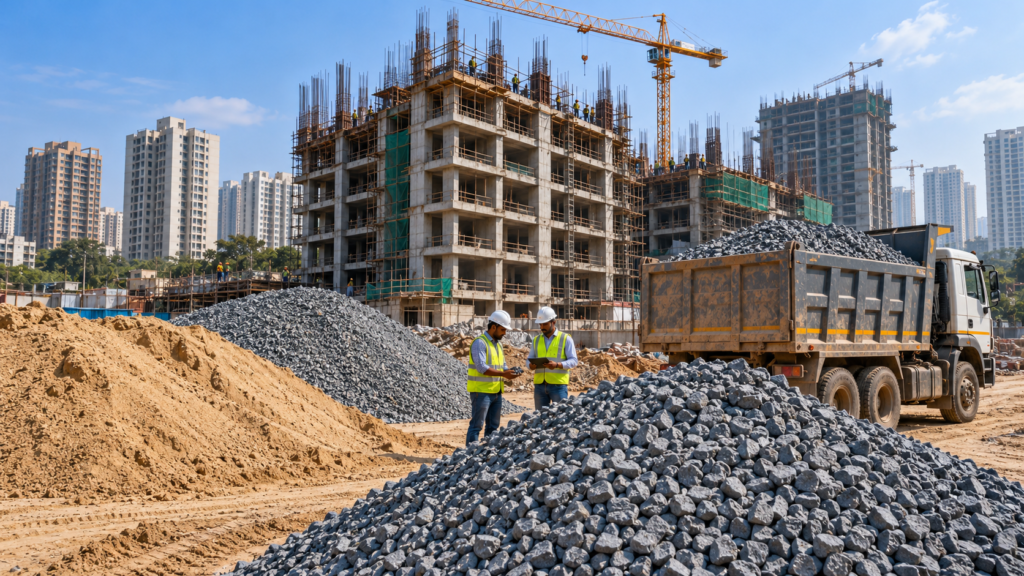
Bengaluru’s construction sector is facing mounting cost pressures as restrictions on the transportation of construction materials from Tamil Nadu disrupt supplies to projects across the city. The shortage of sand, crushed stone and aggregates has pushed procurement costs higher, affected infrastructure works and raised concerns over delays in residential and commercial developments.
The disruption is particularly significant because Bengaluru has traditionally depended on quarries and crusher units in neighbouring Tamil Nadu districts, including Krishnagiri, for a considerable share of its construction material requirements. Industry representatives said that before the restrictions, around 30 to 40 per cent of certain construction materials were sourced from crushers in Krishnagiri.
Following the restrictions, contractors have had to explore alternative supply channels, increasing both procurement costs and transportation challenges. Aggregate prices, which were previously around ₹800 per tonne, have reportedly more than doubled. Sand prices have also increased from approximately ₹250 to ₹300 per tonne to between ₹450 and ₹800 per tonne, according to industry reports.
Builders have additionally reported an increase of 8 to 10 per cent in cement and steel prices. Overall construction costs have risen by 15 to 18 per cent in some projects, while broader estimates indicate a significant increase in real estate construction expenses.
Metro and infrastructure projects face material shortages
The shortage is affecting several infrastructure developments in Bengaluru, including ongoing Metro construction and works along the Outer Ring Road (ORR).
Contractors have reported difficulties obtaining quarry dust, crushed stone and aggregates required for concreting, architectural finishing and other construction activities. The availability of railway ballast, which is essential for track-laying operations, has also become a concern for depot construction.
An engineer associated with an ORR construction project said procurement had earlier relied on nearly 14 quarry and crusher units around Hosur. Following the restrictions, contractors were forced to depend on only four to five crusher units in Bidadi, creating additional pressure on supplies and prices.
The disruption has also affected the transportation sector. Karnataka Truck Owners’ and Agents’ Association president GR Shanmugappa said that more than 40,000 tonnes of stone were being transported to Bengaluru before the restrictions. He added that around 600 to 700 truck owners have been affected.
Why Tamil Nadu imposed restrictions
Tamil Nadu introduced restrictions citing rising domestic demand, inadequate material availability and increasing prices. The measures were also intended to prevent illegal mining and unauthorised transportation of stone materials.
The restrictions came into effect on July 27 for an initial period of three months and have continued beyond that period, affecting material movement across the Karnataka-Tamil Nadu border.
Developers face higher costs and delivery concerns
The rising cost of construction materials is creating financial pressure for developers and contractors. Builders who have already committed property prices to buyers face limited flexibility to pass on additional expenses, particularly under existing Real Estate Regulatory Authority (RERA) commitments.
Higher procurement costs can reduce project margins, increase working-capital requirements and force developers to reconsider construction schedules. Homebuyers could also face indirect consequences if projects are delayed, including additional rental expenses while continuing to pay home loan instalments.
Industry representatives have sought government intervention, including smoother transportation of royalty-paid materials through electronic permits, permission for compliant crusher units to operate for extended hours and relief on certain project approval fees.
The issue requires coordination between the Karnataka and Tamil Nadu governments, particularly on quarry operations, royalty payments, transportation permissions and border-level enforcement.
For Bengaluru, the disruption highlights the importance of a reliable construction material supply chain. Until transportation and procurement channels stabilise, developers and infrastructure contractors are likely to remain exposed to higher costs and uncertain project timelines.
- aggregate price increase
- Bengaluru construction costs
- Bengaluru infrastructure projects
- Bengaluru Metro construction
- Bengaluru Real Estate
- builders association Karnataka
- construction cost inflation
- construction material shortage
- construction material transportation
- crushed stone shortage
- infrastructure development India
- Karnataka construction industry
- Karnataka real estate
- Krishnagiri stone crushers
- M Sand supply
- outer ring road Bengaluru
- P Sand supply
- railway ballast supply
- real estate construction costs
- RERA project delays
- sand price increase
- stone crusher units
- Tamil Nadu construction material ban
- Tamil Nadu Karnataka border trade
- Tamil Nadu quarry restrictions




Related Articles

Pidilite Q2 Results: Revenue Jumps 20.9% to ₹4,298 Crore, but Rising Material Costs Hit Margins
Pidilite Industries reported 20.9% revenue growth to ₹4,298 crore in Q2 FY27,...

JSW Cement Approves ₹1,078 Crore Expansion at Karnataka and Maharashtra Plants
JSW Cement has approved ₹1,078 crore in investments to add 4 million...

India and HD Hyundai Advance Plans for $4 Billion Thoothukudi Shipyard
India and South Korea’s HD Hyundai are moving forward with plans for...



Awfis Expands Premium Workspace Portfolio Across Pune, Bengaluru and Mumbai
Awfis Space Solutions has added 1.45 lakh sq. ft. of premium workspace...

Leave a comment