




India’s Construction Boom Drives Fresh Wave of Steel Industry Investments
 Samrita JosephOctober 22, 20262 Mins read
India’s Construction Boom Drives Fresh Wave of Steel Industry Investments
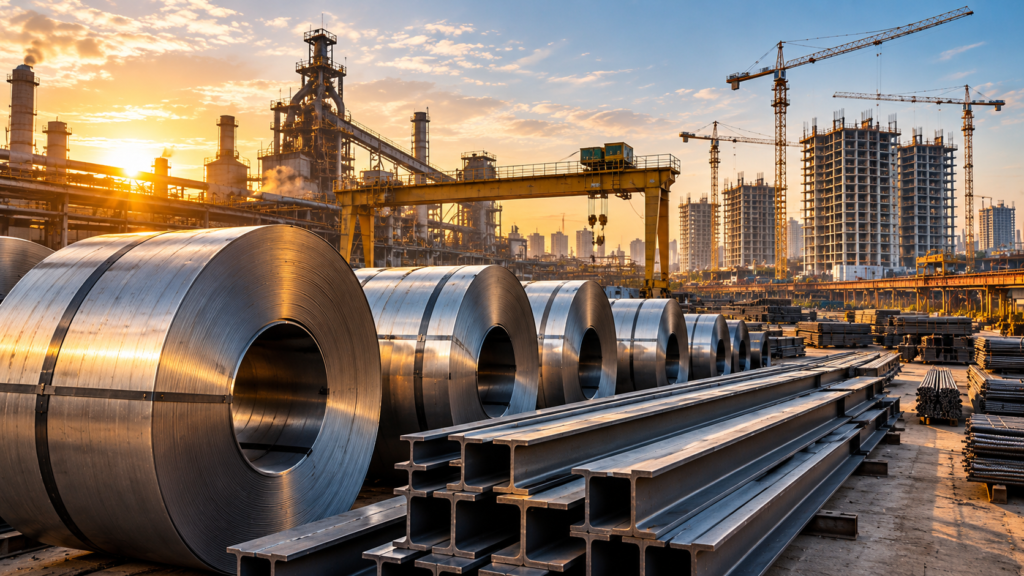
India’s construction boom is creating new investment opportunities across the steel industry, as rising demand from infrastructure, housing, manufacturing and industrial development encourages producers to expand capacity and modernise operations.
From highways and metro rail networks to airports, residential projects and industrial corridors, the country’s infrastructure expansion is increasing the need for construction-grade steel and specialised products. The investment response is visible among major steelmakers as well as smaller manufacturers planning new facilities across several states.
Rising Steel Demand Supports Capacity Expansion
India’s finished steel consumption reached approximately 164 million tonnes in Financial Year 2025–26, compared with around 77 million tonnes in Financial Year 2014–15. The increase highlights the expansion of the domestic market over the past decade and explains why producers are preparing for further growth.
Steel demand extends beyond reinforcement bars used in buildings. Transport infrastructure, renewable energy, automotive manufacturing, engineering equipment and industrial facilities also require a wide range of steel products. This broader demand base is encouraging manufacturers to invest in additional production capacity and downstream processing.
JSW Steel Outlines Major Expansion Plans
JSW Steel is among the companies committing substantial capital to future growth. Its expansion roadmap includes an estimated ₹1.26 lakh crore capital expenditure programme over the next four to five years.
Key projects include a proposed ₹31,600 crore greenfield steel plant with an annual capacity of five million tonnes at Paradip in Odisha, alongside a ₹26,000 crore expansion that would add five million tonnes of annual capacity at Vijayanagar in Karnataka.
The company aims to increase its domestic steelmaking capacity, including joint ventures, to approximately 78 million tonnes per annum by Financial Year 2031–32. Tata Steel, Steel Authority of India Limited and Jindal Steel are also pursuing expansion and modernisation initiatives.
Regional Manufacturers Join the Investment Cycle
The investment trend is not confined to large integrated steel producers. Project proposals across states including Chhattisgarh, West Bengal and Gujarat cover rolling mills, induction furnaces, sponge iron plants, steel melting shops and ferroalloy facilities.
These projects could strengthen regional supply networks, particularly for construction-grade steel. However, proposed investments must progress through approvals, financing and construction before they translate into additional production.
Opportunities and Challenges Ahead
Steel plant expansions can generate orders for engineering, procurement and construction contractors, equipment manufacturers, automation providers and industrial infrastructure suppliers. At the same time, volatile raw material prices, energy costs, environmental requirements and international competition remain important risks.
India’s National Steel Policy targets 300 million tonnes of crude steelmaking capacity by 2030–31. Achieving that ambition will depend on demand growth and the timely execution of planned projects.
The construction boom is providing a strong foundation for steel investment, but actual capacity additions will ultimately depend on project viability, market conditions and implementation progress.
- construction boom India
- construction steel demand
- EPC contracts India
- India steel industry
- India steel production
- Indian infrastructure sector
- Indian Steel Market
- industrial investment India
- infrastructure development India
- Jindal Steel
- JSW Steel expansion
- National Steel Policy
- Paradip steel plant
- rolling mill expansion
- secondary steel manufacturers
- sponge iron industry
- Steel Authority of India Limited
- Steel Capacity Expansion
- Steel Consumption India
- steel industry investment
- steel manufacturing
- steel manufacturing capacity
- steel plant projects
- Tata Steel
- Vijayanagar steel plant



Related Articles

L&T Secures ₹2,500–5,000 Crore Government Building Orders in Delhi and Amaravati
L&T has secured two government building projects valued between ₹2,500 crore and...
Haier India Plans ₹7,000 Crore Manufacturing Investment in Andhra Pradesh
Haier India plans to invest ₹7,000 crore in a manufacturing facility at...

Kalpataru Projects Secures ₹2,349 Crore Orders as FY27 Inflows Cross ₹22,000 Crore
Kalpataru Projects International has secured new domestic orders worth ₹2,349 crore for...



IHCL Q2 FY27 Results: Revenue Rises 21% to ₹2,566 Crore, Hotel Portfolio Reaches 670
Indian Hotels Company Limited (IHCL) reported 21% revenue growth to ₹2,566 crore...

Leave a comment