




Freight Cost Surge Becomes Major Challenge For India’s Steel Industry, Says Tata Steel Official
 Samrita JosephMay 22, 20261 Mins read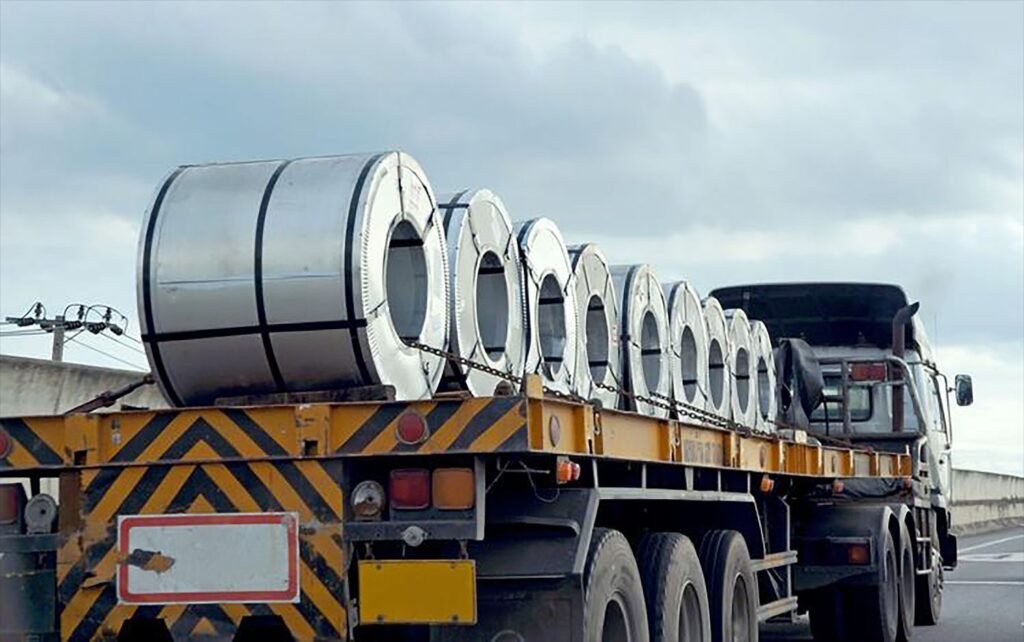
India’s steel industry is facing rising pressure from global freight costs, even as domestic production and raw material supplies remain largely stable. A senior Tata Steel official said shipping rates have increased by nearly 28 to 30 percent amid geopolitical tensions, making logistics one of the biggest challenges for steelmakers.
The increase in freight rates has been linked to the continuing Russia Ukraine conflict and the escalating situation in West Asia. These global developments have affected shipping routes, vessel availability and overall transportation costs. For steel companies that depend on imported raw materials, the impact is being felt directly through higher input and logistics expenses.
Tata Steel Vice President Corporate Services D B Sundara Ramam said freight is currently the biggest impact area for the steel sector. He noted that the rise in shipping costs is creating a cascading effect across countries and industries. Although production has not been significantly disrupted, the cost of moving raw materials has become a major concern.
Tata Steel imports around 78 percent of its coking coal requirement, mainly from Australia. The remaining requirement is met through domestic mines in West Bokaro and Jharia. Supplies from Australia and Indonesia remain operationally stable, but higher freight charges are pushing up costs across the sector.
The company also said tensions around the Strait of Hormuz have not materially affected its raw material security. India remains largely self sufficient in iron ore and imports only limited quantities. However, disruptions in limestone imports from the Gulf region have encouraged Tata Steel to explore alternate sources and strengthen mineral self reliance.
Despite global uncertainty, India’s steel demand remains strong. Domestic finished steel consumption grew by about 7 to 8 percent to 164 million tonnes in FY26, supported by infrastructure, construction, railways, manufacturing and automobile demand. Crude steel output rose over 10.7 percent to around 168.4 million tonnes.
Tata Steel India produced 23.4 million tonnes in FY26 and delivered 22.5 million tonnes. The company said it is monitoring global risks closely while focusing on operational resilience, cost optimisation and supply chain stability.
- Build Watch News
- coking coal imports
- construction sector India
- crude steel output
- finished steel consumption
- freight cost surge
- FY26 steel production
- global freight rates
- India steel industry
- Indian Manufacturing
- Indian Steel Sector
- Infrastructure Growth
- iron ore India
- limestone imports
- logistics pressure
- raw material supply
- Russia Ukraine war
- steel demand India
- steel industry news
- steel logistics cost
- steel production India
- steel supply chain
- Tata Steel
- Tata Steel India
- West Asia conflict

Related Articles
JSW Cement Q4 Profit Jumps To ₹362 Crore On Higher Volumes And Strong Margins
JSW Cement reported a sharp rise in Q4 FY26 profit to ₹362...
Freight Cost Surge Becomes Major Challenge For India’s Steel Industry, Says Tata Steel Official
Tata Steel said global freight costs have risen 28 to 30 percent...
Adani’s APSEZ To Acquire JFIL For 243 Acre Logistics Park Plan In Kanpur
Adani’s APSEZ will acquire JFIL to gain indirect control of 243 acres...



QUAD Integrated Township At Technocity To Strengthen Kerala’s IT Infrastructure
Kerala’s ₹1,600 crore QUAD integrated township at Technocity in Thiruvananthapuram is set...

Leave a comment