





Vizhinjam International Seaport Begins Full EXIM Operations, Opening New Gateway for Kerala Trade
 Samrita JosephAugust 19, 20262 Mins read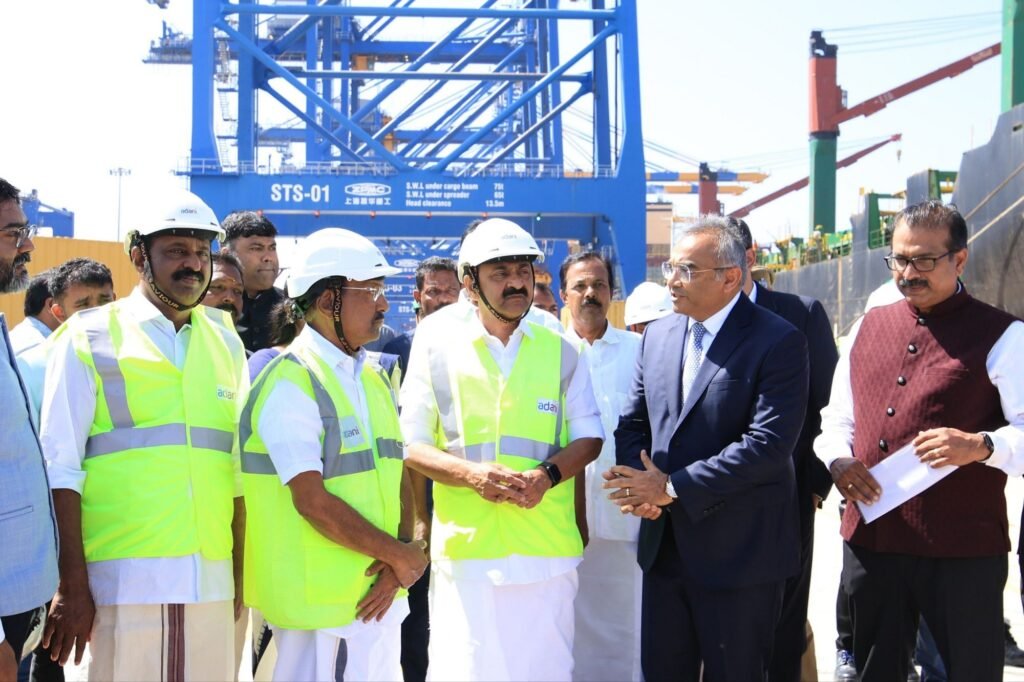
Vizhinjam International Seaport has entered a significant new phase with the commencement of full export-import operations, moving the facility beyond its earlier focus on transshipment and towards direct international cargo movement.
The development is expected to give exporters in Kerala and neighbouring regions another route to overseas markets. Businesses that have traditionally moved cargo through major transshipment hubs such as Colombo, Singapore and Dubai could increasingly use Vizhinjam for direct shipments, potentially reducing transit times and logistics costs.
The start of export-import services comes alongside Mission Samudra, the Kerala government’s wider programme for port-led industrial and logistics development. The initiative seeks to position Vizhinjam as the anchor of a broader maritime economic region, linking the port with industrial clusters, logistics infrastructure, urban development and improved connectivity.
The state has allocated ₹400 crore as a catalytic fund for Mission Samudra. The programme covers ports and connectivity, cities and logistics, and industrial development and clusters, along with a separate component for programme management and capacity building.
The new gateway could be particularly useful for small and medium businesses handling agricultural products, spices, cashew, marine products, handloom and textiles. Direct access to international shipping services could help these businesses streamline supply chains and reach overseas markets more efficiently.
Vizhinjam has so far operated primarily as a transshipment facility, where containers are transferred between vessels. Since beginning commercial operations in 2024, the port has rapidly expanded its container-handling activity and established itself as an important maritime facility on India’s southern coast.
The transition to gateway cargo operations follows final Customs approval. During the initial phase, certain restrictions will apply to the types of import and export cargo that can be handled. Import operations will initially focus on eligible full-container-load shipments for Direct Port Delivery, while export operations will cover factory-stuffed, self-sealed or Customs-sealed full-container-load shipments.
Cargo requiring loose stuffing, de-stuffing or examination through a Container Freight Station will not be permitted until a designated facility becomes operational. This makes supporting logistics infrastructure an important part of Vizhinjam’s next stage of growth.
Warehouses, cold storage facilities, container freight stations and logistics parks are likely to see greater demand as direct cargo movement expands. The state government also expects the wider port-led development programme to create employment across logistics, port operations, trade, construction and related urban services.
Connectivity will be another critical factor in determining Vizhinjam’s long-term role in Kerala’s trade network. The broader plans envisage stronger links between the port, road and rail networks, manufacturing zones, dry ports and other logistics facilities.
The port’s location close to the international east-west shipping route gives Vizhinjam a significant geographic advantage. Its deep-water facilities are designed to handle some of the world’s largest container vessels, supporting Kerala’s ambition to establish the facility as a major international maritime gateway.
However, the move to EXIM operations does not mean transshipment activity will disappear. Transshipment is expected to remain an important part of Vizhinjam’s business, particularly during the initial phase, while gateway cargo gradually increases.
The immediate challenge will be creating an efficient ecosystem around the port. Adequate logistics facilities, road and rail connectivity, customs infrastructure and cargo-handling capacity will be essential if Vizhinjam is to translate its strategic location into a wider economic advantage.
For Kerala, the start of EXIM operations represents more than a change in the way cargo is handled. It is an attempt to connect the state’s maritime infrastructure more directly with manufacturing, trade and logistics activity.
The success of Mission Samudra, along with the growth of direct international cargo movement, will determine how significantly Vizhinjam contributes to Kerala’s export economy. If supporting infrastructure develops alongside cargo activity, the port could become an important driver of trade and industrial growth in the state.
- direct cargo movement
- export logistics India
- import logistics India
- international cargo Kerala
- international shipping Kerala
- Kerala exports
- Kerala imports
- Kerala Industrial Development
- Kerala logistics
- Kerala maritime economy
- Kerala maritime trade
- Kerala Port
- Kerala trade
- logistics infrastructure Kerala
- maritime infrastructure Kerala
- Mission Samudra
- port infrastructure India
- Vizhinjam container terminal
- Vizhinjam development
- Vizhinjam EXIM operations
- Vizhinjam International Seaport
- Vizhinjam port
- Vizhinjam port city
- Vizhinjam port operations
- Vizhinjam transshipment





Related Articles

Sobha Records ₹5,862 Crore Half-Year Sales as New Projects Drive Growth
Sobha Limited records its highest-ever half-year sales of ₹5,862 crore in the...
APL Apollo Tubes Records Highest-Ever Quarterly Sales Volume at 963,143 Tonnes
APL Apollo Tubes recorded an all-time high quarterly sales volume of 963,143...

AAI Proposes Elevated Road Linking Tambaram–Porur to Chennai Airport
AAI has submitted a DPR to the Tamil Nadu government for an...


Andhra Pradesh Clears 250 Acres for Dalmia Cement’s Kadapa Expansion
Andhra Pradesh has approved 250 acres for Dalmia Cement’s Kadapa expansion, increasing...

Leave a comment