




India Imposes Three-Year Safeguard Duty on Steel Imports to Curb Cheap Inflows
 Samrita JosephDecember 31, 20251 Mins read
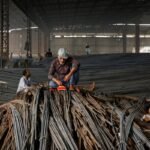
India has moved decisively to shield its domestic steel industry by imposing a safeguard duty ranging between 11 percent and 12 percent on select steel products for a period of three years. The decision, notified through a finance ministry order published in the official gazette, is aimed at curbing the inflow of cheap steel imports, especially from countries such as China, Vietnam and Nepal.
Under the new framework, the safeguard duty will be levied at 12 percent in the first year, reduced to 11.5 percent in the second year, and further tapered to 11 percent in the third year. The levy will apply to certain non-alloy and alloy steel products, while specialty steel items, including stainless steel, have been kept outside its ambit. Imports from select developing countries have also been exempted, in line with global trade norms.
The move follows the expiry of a temporary 200-day safeguard duty of 12 percent that was imposed in April this year. Despite that interim measure, the government observed continued pressure on domestic steelmakers due to rising imports at depressed global prices. India remains one of the world’s largest steel producers, yet low-cost shipments have raised concerns over pricing, capacity utilisation and profitability across the sector.
The recommendation for a longer-term duty came from the Directorate General of Trade Remedies, which noted a “recent, sudden, sharp and significant increase” in steel imports. According to the DGTR, this surge was causing, and threatened to cause, serious injury to the domestic industry, warranting a structured and time-bound safeguard mechanism.
The federal steel ministry has consistently maintained that unchecked imports of cheap and sub-standard steel could undermine India’s manufacturing base and derail ongoing investments in capacity expansion and technology upgrades. Industry participants have welcomed the clarity provided by the three-year duty, viewing it as a more predictable alternative to short-term measures.
Globally, steel trade tensions have intensified in recent months. Tariffs imposed by the United States under President Donald Trump have triggered a chain reaction, with several countries stepping up trade remedies against Chinese steel. South Korea and Vietnam, among others, have introduced anti-dumping measures earlier this year, reflecting broader concerns over excess capacity and price distortions.
For India, the safeguard duty is expected to support domestic realisations, improve margin stability and encourage long-term investment, even as policymakers balance protection with competitiveness in an increasingly complex global steel market.
- alloy steel tariff
- anti dumping measures
- capital goods steel impact
- Chinese steel imports
- DGTR safeguard duty
- domestic steel protection
- global steel prices
- import duty steel
- India China trade
- India manufacturing policy
- India Steel Imports
- India Vietnam steel trade
- infrastructure steel demand
- non alloy steel imports
- Safeguard Duty Steel
- Steel Industry India
- steel margin stability
- steel market India
- steel policy India
- Steel Producers India
- steel sector news
- steel tariff India
- steel trade tensions
- sub standard steel imports
- trade remedies India






Related Articles

KMV Projects Emerges L1 for ₹138 Crore Vijayawada Airport Terminal Works
KMV Projects has emerged as the lowest bidder to complete the remaining...

Casagrand Launches ‘Ascentia’ Residential Project in Coimbatore’s Saravanampatti
Casagrand Premier Builder has launched Casagrand Ascentia in Saravanampatti, Coimbatore, a 238-home...
Saint-Gobain Opens India’s First Near-Net Zero Gypsum Ceiling Tiles Plant in Visakhapatnam
Saint-Gobain India’s Gyproc business has commissioned India’s first near-net zero gypsum ceiling...



KG Builders Launches Two Plotted Residential Projects in Western Chennai
Chennai-based KG Builders has launched two plotted residential communities in Kuthambakkam and...

Leave a comment