





BEML Plans Indigenous Tunnel-Boring Machines to Reduce India’s Dependence on Imports
 Samrita JosephNovember 14, 20261 Mins read
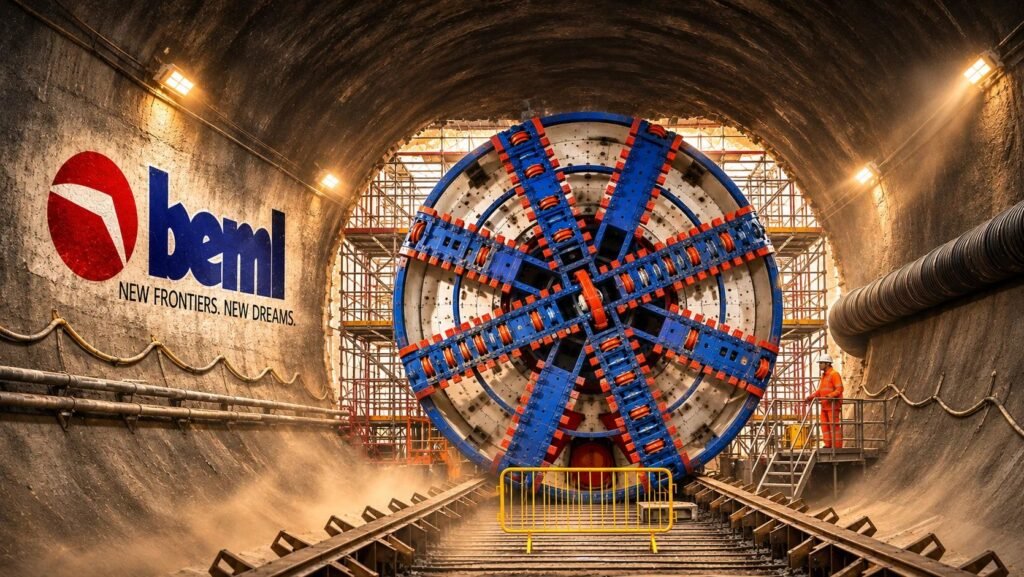
India’s expanding infrastructure programme is creating new opportunities for domestic construction equipment manufacturers, and state-owned BEML Ltd is preparing to enter a specialised segment that has largely depended on overseas technology. The company plans to develop indigenous tunnel-boring machines (TBMs), targeting growing demand from metro rail, hydropower, irrigation and underground infrastructure projects.
BEML will initially focus on smaller tunnel-boring machines with diameters ranging from 3.5 metres to 6.5 metres before gradually moving into larger equipment. Chairman and Managing Director Shantanu Roy said the company has completed its preliminary groundwork and is ready with a development plan. BEML is also onboarding a global consultant to support the initiative.
The proposed strategy comes as India seeks to reduce its dependence on imported construction machinery, particularly equipment sourced from China. The country’s growing investment in underground transportation, road connectivity and strategic infrastructure has increased the need for specialised tunnelling equipment.
Unlike conventional assembly-based manufacturing, BEML intends to develop its own technology and intellectual property. Roy indicated that the machines would be built using indigenous technology, with Indian ownership of the underlying intellectual property.
The initial focus on smaller machines reflects a phased approach to entering the market. Larger tunnel-boring machines involve more complex engineering requirements. For perspective, the machines used in the Mumbai section of India’s first bullet train project have cutter heads measuring approximately 13.6 metres in diameter. These were manufactured by Germany’s Herrenknecht at its facility in China.
Market conditions could support BEML’s expansion plans. Roy estimates that India’s tunnel-boring machine market could grow by around 12 per cent annually over the next seven to eight years, approximately twice the expected global market growth rate.
Government investment plans are also creating demand. Union Road Transport and Highways Minister Nitin Gadkari has indicated that India could invest up to $9.6 billion in tunnelling projects over the next five years. Railway and road projects across the Himalayan region are another potential source of demand.
However, developing a commercially viable domestic manufacturing capability will take time. BEML estimates that delivering its first machine could take approximately 22 months after securing a contract.
The initiative could mark an important step towards strengthening India’s domestic construction equipment manufacturing ecosystem.
- BEML
- BEML Tunnel Boring Machines
- construction equipment industry
- Construction Machinery
- Domestic Manufacturing
- Highway Tunnels India
- Hydropower Projects India
- import substitution India
- Indian infrastructure
- Indian Manufacturing Industry
- Indigenous Construction Equipment
- infrastructure development India
- Infrastructure Investment
- Infrastructure news
- irrigation infrastructure
- Make in India
- metro rail infrastructure
- mining and construction equipment
- railway infrastructure
- Shantanu Roy
- TBM manufacturing India
- Tunnel Boring Machines
- Tunnel Construction
- Tunnel Engineering
- Underground Infrastructure



Related Articles
Rourkela Steel Plant Expansion May Be Cut to 3 MTPA Amid Funding and Rail Link Delays
Rourkela Steel Plant, SAIL expansion, Rourkela Steel Plant expansion, Odisha steel industry,...

Somany Ceramics Plans 16 Million Sq Metre GVT Capacity Expansion
Somany Ceramics plans to add 16 million square metres of glazed vitrified...

Marriott Signs Deal for South Asia’s Largest Courtyard Hotel in Bengaluru
Marriott International and Vedant Enterprises have signed an agreement to develop a...


Chennai Gets Green Light for 6,157 New Homes Under ₹1,401 Crore Housing Plan
Tamil Nadu has approved ₹1,401.75 crore for 6,157 new tenements across nine...

Leave a comment