





India Needs 2.6 Billion Sq. Ft of Additional Healthcare Real Estate by 2035: CBRE
 Samrita JosephOctober 17, 20261 Mins read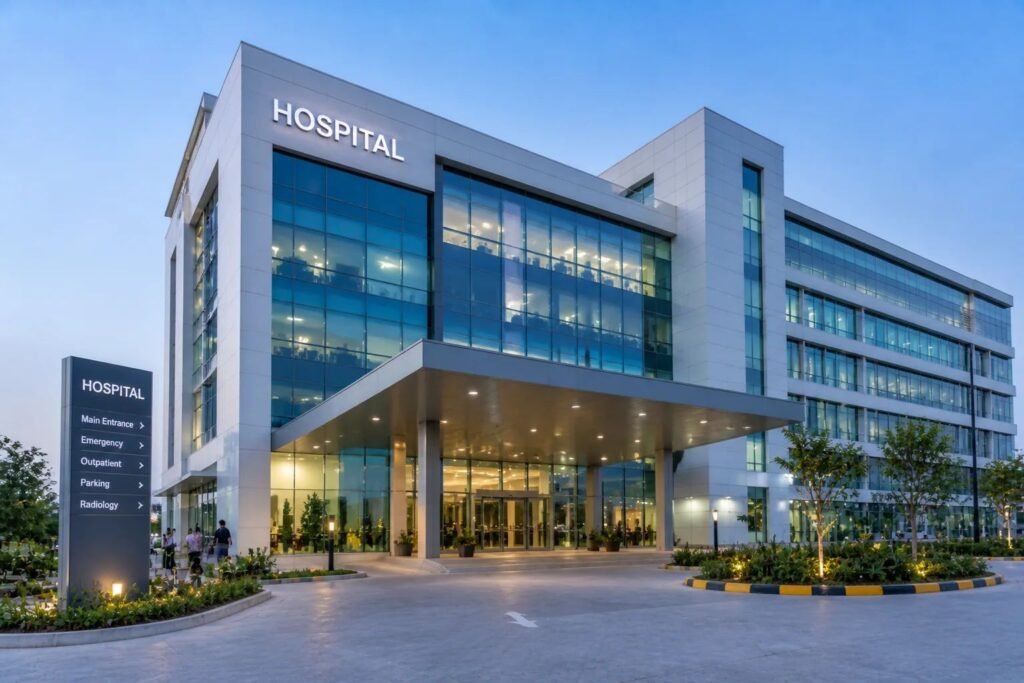
India’s healthcare infrastructure will need a significant expansion over the next decade, with the country requiring an additional 2.6 billion sq. ft of healthcare real estate by 2035. The expansion will be driven by the need for nearly 2.9 million additional hospital beds, according to a report by CBRE South Asia.
The report, titled Beyond Core: A 2035 View of India’s Alternate Sectors – Part I, highlights the growing gap between India’s existing healthcare capacity and the infrastructure required to meet future demand. The country currently has approximately 1.6 hospital beds per 1,000 people, well below the global average of 3.3 beds per 1,000 people.
India’s healthcare real estate footprint stood at an estimated 2.1 billion sq. ft in 2025. Expanding this capacity will require more than the construction of large hospitals. The report points to a broader need for healthcare facilities that can serve different patient requirements, from specialised treatment and diagnostics to outpatient care.
Regional differences in healthcare access are also shaping the potential for new development. Chhattisgarh, Odisha, Madhya Pradesh and Jharkhand have relatively low hospital bed density compared with their non-communicable disease burden. This indicates potential unmet demand for secondary and tertiary healthcare services in these states.
In contrast, Karnataka, Kerala, Tamil Nadu and Telangana have comparatively stronger healthcare infrastructure and higher household incomes. These conditions could support further investment in specialised hospitals and medical ecosystems.
The report also identifies changing expansion strategies among healthcare operators. Single-speciality hospitals, day-care centres and outpatient facilities are gaining attention, while acquisitions of existing hospitals offer operators a faster route into established markets. Such transactions can provide access to operational infrastructure, licences and existing patient networks.
Medical office buildings represent another emerging opportunity. These developments can bring diagnostics, rehabilitation, fertility treatment, eye care, dental services and wellness providers together within a single property. Co-locating services could improve patient convenience while making more efficient use of real estate assets.
CBRE also highlights the potential of Tier II and Tier III cities, where lower land costs and the availability of larger plots could support purpose-built healthcare projects.
As India’s healthcare requirements increase, the next phase of development is likely to involve a wider mix of hospitals, outpatient facilities and specialised medical properties across major cities and emerging urban centres.
- CBRE South Asia
- day care centres
- healthcare development
- healthcare infrastructure 2035
- healthcare infrastructure India
- Healthcare investment India
- healthcare property investment
- healthcare property market
- hospital beds India
- hospital construction
- hospital real estate
- India healthcare real estate
- India real estate outlook
- Indian Real Estate
- Karnataka healthcare
- Kerala healthcare
- medical office buildings
- medical real estate
- outpatient healthcare facilities
- single speciality hospitals
- specialised hospitals
- Tamil Nadu healthcare
- Telangana healthcare
- Tier II cities India
- Tier III cities India



Related Articles
Bengaluru Metro Targets November Trial Runs for Pink and Blue Lines, Opening Set for May 2027
Bengaluru Metro plans to begin trial runs on the Pink Line underground...
Tinna Rubber Registers 19 Acres in Andhra Pradesh for ₹250 Crore Recycling Complex
Tinna Rubber has registered 19 acres in Andhra Pradesh for a proposed...

Greenply Industries Launches XPro Veneer Range for Premium Residential and Corporate Interiors
Greenply Industries has introduced XPro, a new veneer range under its Woodcrest...


DLF Q2 Net Profit Rises 10.3% to ₹1,301 Crore as Revenue and EBITDA Decline
DLF reported a 10.3% year-on-year increase in second-quarter net profit to ₹1,301...

Leave a comment