




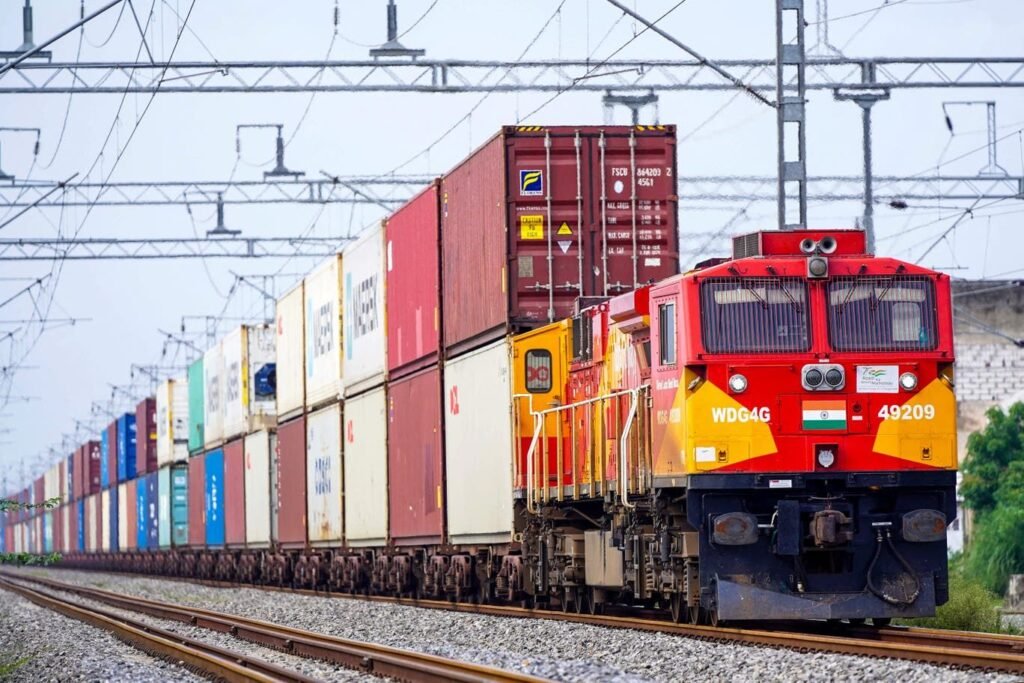
The Union Cabinet has approved a ₹1,264 crore railway infrastructure project to construct third and fourth railway lines on the Ballari–Guntakal section, a key freight corridor connecting Karnataka and Andhra Pradesh. The project is expected to enhance rail capacity, reduce congestion and improve logistics efficiency, reinforcing the government’s continued focus on expanding India’s railway infrastructure.
Scheduled for completion during the 2028-29 financial year, the project will add around 46 kilometres to the Indian Railways network. The additional lines are designed to improve operational flexibility while ensuring faster movement of freight trains on one of the country’s important mineral and industrial transport routes.
The Ballari–Guntakal corridor plays a significant role in transporting bulk commodities such as iron ore, iron and steel, limestone, dolomite, coal, fertilisers and foodgrains. According to the government, the upgraded railway infrastructure will support the movement of approximately 16.22 million tonnes of freight every year, helping industries move raw materials and finished products more efficiently.
The project is being implemented under the PM Gati Shakti National Master Plan, which focuses on improving multimodal connectivity through integrated infrastructure planning. The expansion is also expected to improve connectivity across three districts in Karnataka and Andhra Pradesh, benefiting nearly 99 villages with a combined population of around seven lakh people.
Apart from supporting industrial logistics, the railway upgrade is expected to improve passenger services by easing congestion on the existing route. Better connectivity to destinations such as Ballari Fort and the Sri Kumara Swamy Temple is also expected to benefit regional tourism.
The government believes that shifting more freight movement from road to rail will generate long-term environmental and economic benefits. Estimates indicate the project could reduce oil consumption by around 1.32 crore litres while lowering carbon dioxide emissions by nearly 6.67 crore kilograms. Improved freight efficiency, lower logistics costs and increased rail capacity are expected to strengthen industrial growth across southern India while supporting the country’s broader infrastructure development goals.
- Andhra Pradesh railway projects
- Ballari Guntakal rail expansion
- Ballari Guntakal railway project
- BuildWatch News
- cargo transportation
- Freight Corridor India
- freight transportation
- India Infrastructure
- Indian rail network
- Indian Railways
- infrastructure news India
- iron ore transportation
- Karnataka railway projects
- logistics sector India
- multimodal connectivity
- PM Gati Shakti
- rail connectivity
- rail freight capacity
- railway development
- railway expansion 2026
- railway infrastructure
- railway logistics India
- steel industry logistics
- Transport Infrastructure
- Union Cabinet Approval


Related Articles

Havelock Bridge Redevelopment: Andhra Pradesh Sanctions ₹47 Crore to Transform Heritage Landmark into Tourism Hub
The Andhra Pradesh government has approved a ₹47 crore redevelopment project for...
Hindalco plans ₹50,000 crore investment in India, evaluates another ₹50,000 crore expansion pipeline
Hindalco Industries plans to invest ₹50,000 crore in India over the next...
Union Cabinet likely to clear incentive scheme for construction equipment manufacturing by August-end
The Union Cabinet is expected to approve a new incentive scheme by...


Chennai Airport Modernisation to Be Completed by December 2026, Says Centre
The Centre has revised the completion deadline for the ₹2,467 crore Chennai...

Leave a comment