





Safeguard Duty on Steel Imports Gives Domestic Mills Pricing Leverage
 Samrita JosephJanuary 3, 20262 Mins read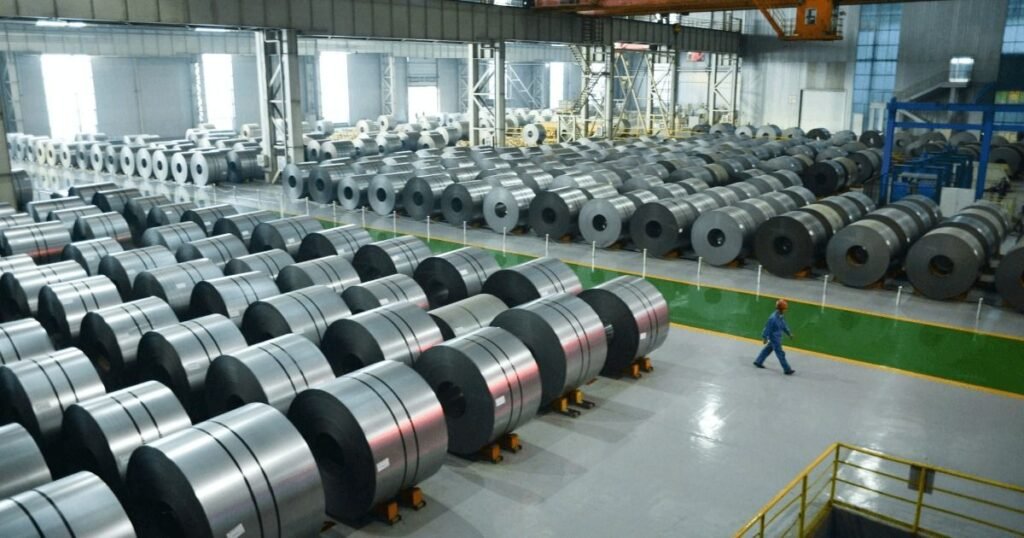
India’s decision to impose a three-year safeguard duty on select steel imports is emerging as a significant support mechanism for domestic steelmakers, offering them much-needed pricing headroom after several quarters of pressure. The duty, ranging from 12 percent in the first year to 11 percent in the third year, is aimed at restricting low-priced imports, particularly from China, Vietnam and Nepal, while protecting local manufacturers from unfair competition.
Industry experts believe the measure could help steel producers stabilise prices and margins at a time when input costs are rising. Over the past month alone, coking coal prices have increased by around $10–15 per tonne, while currency volatility has added further cost pressure.
Against this backdrop, analysts expect steelmakers to push through price hikes of around Rs 1,000 per tonne in the near term, especially as demand from construction, infrastructure and automobiles improves post-monsoon.
The safeguard duty covers flat steel products such as hot rolled coils, cold rolled sheets and coated steel, which together account for nearly 60 percent of India’s steel imports. While imports are unlikely to stop completely, market participants estimate that the duty could reduce overall steel imports by 20–25 percent in FY26 and FY27. At the same time, exemptions for strategic products like stainless steel and CRGO steel ensure that critical supply chains for renewable energy and power transmission remain uninterrupted.
Domestic steelmakers have long argued that persistent dumping by overseas suppliers distorted the market and discouraged long-term investment. The recommendation by the Directorate General of Trade Remedies for a longer-duration safeguard duty follows findings of a sharp and sudden surge in imports that threatened serious injury to the local industry. Compared to temporary measures, a three-year framework provides predictability, allowing companies to plan capacity utilisation, pricing strategies and capital expenditure with greater confidence.
Globally, steel markets remain under stress due to excess capacity and weak demand, particularly in China. Trade frictions have intensified, with several countries adopting protective measures to shield domestic industries. In this context, India continues to stand out as a relatively strong demand market, supported by infrastructure-led growth and steady urbanisation.
For Indian steelmakers, the safeguard duty could act as a balancing tool rather than a trigger for aggressive price hikes. Analysts caution that while moderate increases are likely, sharper hikes may face resistance as prices have already recovered from recent lows. Overall, the move is expected to support margin stability, encourage disciplined pricing, and reinforce confidence in India’s steel sector as it navigates global volatility.
- automotive steel demand
- capital goods impact
- Chinese steel imports
- coking coal prices
- cold rolled steel India
- construction steel demand
- DGTR safeguard duty
- domestic steelmakers
- Flat Steel Products
- Global Steel Overcapacity
- hot rolled coil prices
- import curbs India
- India Steel Imports
- infrastructure steel India
- Make in India steel
- Safeguard Duty Steel
- Steel Industry India
- steel margins India
- Steel Market Outlook
- steel price hike India
- steel pricing power
- steel sector news
- steel tariff India
- trade remedies India
- Vietnam Steel Imports


Related Articles
Finolex Industries Q1 FY27 Profit Rises 10% to ₹107 Crore Despite Revenue Decline
Finolex Industries reported a 10% increase in Q1 FY27 net profit to...
Shyam Metalics Reports Strong July Performance as Stainless Steel Sales Rise 13%, Pellet Dispatches Surge 88%
Shyam Metalics & Energy reported strong operational performance in July 2026, with...

Vedaanta Senior Living to Invest ₹800 Crore Across South India, Allocates ₹450 Crore for Tamil Nadu Expansion
Bengaluru-based Vedaanta Senior Living will invest ₹800 crore over the next three...


India’s Primary Steel Producers Expected to Maintain Stable Profitability in FY27 Despite Rising Costs: Crisil Ratings
India's primary steel producers are expected to maintain stable profitability in FY27...

Leave a comment