




Karnataka Raises FAR to 5.2 in KIADB Areas, Set to Reshape Industrial Skyline
 Samrita JosephFebruary 11, 20261 Mins read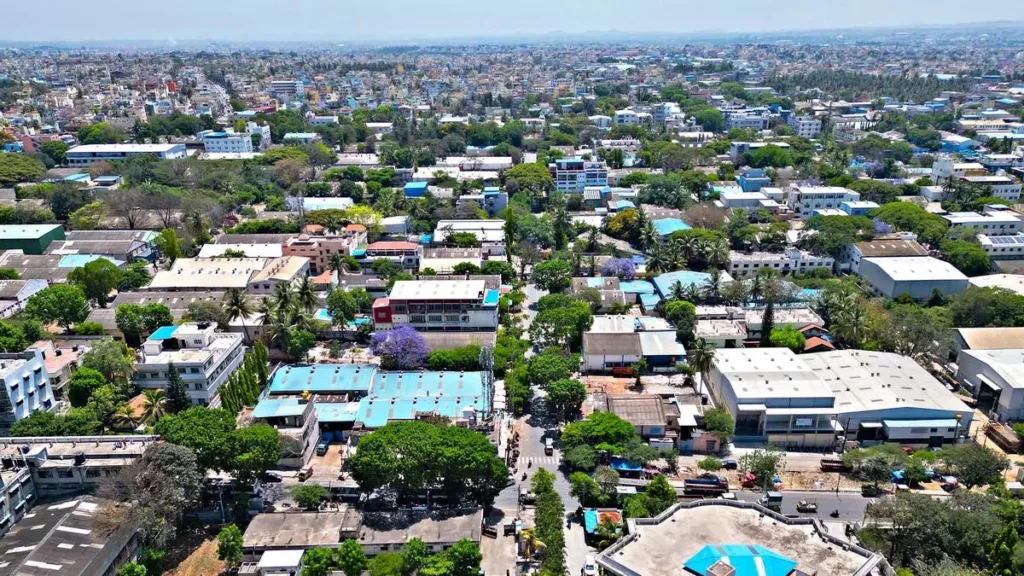
Karnataka’s decision to relax building norms in areas governed by the Karnataka Industrial Areas Development Board is expected to significantly transform the development landscape of Bengaluru and other industrial hubs across the state. By increasing the permissible Floor Area Ratio up to 5.2 in select zones, the government has opened the door for taller and denser industrial, commercial and mixed use projects.
Floor Area Ratio, also known as Floor Space Index, determines how much construction is allowed on a given plot of land. It is calculated by dividing the total built up area of all floors by the total plot area. A higher FAR enables developers to build vertically, optimising limited land resources while accommodating more economic activity within the same footprint.
Under the revised norms, industrial plots located along roads wider than 30 metres can achieve a maximum FAR of 5.2, subject to payment of a premium. Earlier, such plots were allowed a FAR of around 3.25. Plots along 24 to 30 metre roads can now build up to 4.8 FAR, while those on 18 to 24 metre roads are eligible for 4 FAR. The move is designed to improve land efficiency, reduce regulatory bottlenecks and accelerate investments into industrial townships.
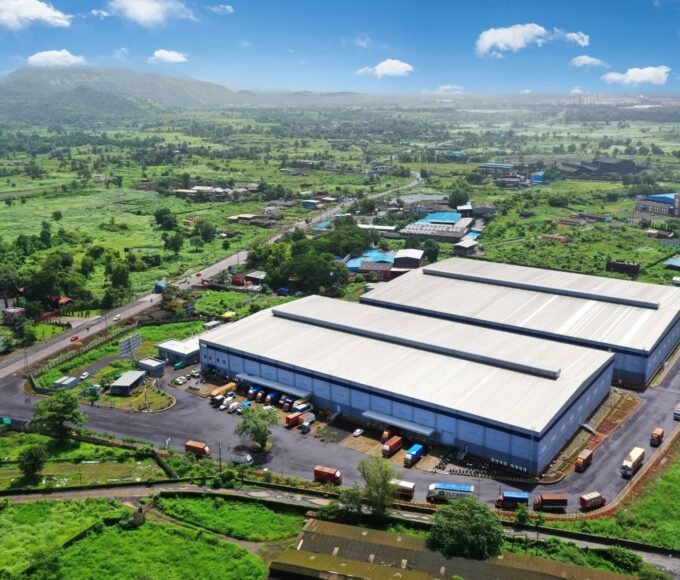
The policy shift is expected to encourage vertical factories, multi storey warehouses and integrated industrial campuses combining manufacturing, logistics, offices and worker housing. Industry observers believe the change will reduce per unit land costs, improve productivity and generate employment, particularly in emerging industrial corridors beyond Bengaluru.
However, experts also caution that higher density development must be supported by corresponding upgrades in roads, utilities and public infrastructure to ensure sustainable urban growth. If implemented effectively, the revised FAR framework could mark a significant step in strengthening Karnataka’s industrial competitiveness.
- Bengaluru industrial development
- Bengaluru skyline change
- business expansion Karnataka
- commercial development Bengaluru
- FAR 5.2 Karnataka
- Floor Area Ratio explained
- FSI increase Karnataka
- industrial corridor development
- industrial growth South India
- industrial investment Karnataka
- industrial townships Karnataka
- infrastructure and urban growth
- integrated industrial campus
- Karnataka FAR revision
- Karnataka government order
- Karnataka infrastructure policy
- Karnataka real estate news
- KIADB new rules
- land use efficiency India
- manufacturing hubs Karnataka
- multi storey warehouses
- premium FAR policy
- real estate reforms Karnataka
- urban planning India
- vertical factories India





Related Articles

Sundaram Home Finance Targets ₹200 Crore Emerging Business Disbursements in Central Tamil Nadu
Sundaram Home Finance targets nearly ₹200 crore in Emerging Business disbursements across...
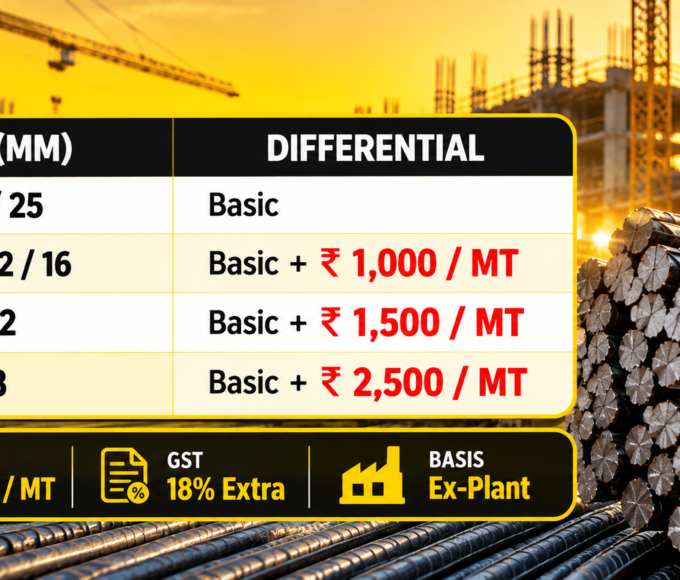
Chennai-Based Secondary TMT Mills Raise Gauge Differentials Amid Rising Costs
Chennai-based secondary TMT mills have revised gauge differentials, adding ₹1,000–₹2,500 per tonne...

India’s Coated Flat Steel Prices Hit Four-Year High Amid Supply Tightness
India’s coated flat steel prices have reached a four-year high as supply...


Interarch Building Solutions Raises FY28 Revenue Target to ₹2,700 Crore
Interarch Building Solutions has raised its FY28 revenue target to ₹2,700 crore...

Leave a comment